
Inside EMA: Meeting Offer Refused for All Requesters, a Reason to Join the T4S Initiative Now!
In a meeting on 2nd of July 2026 in Amsterdam, the EMA demonstrated its willingness to keep all relevant regulatory data secret, raising questions why scientific re-assessment is made impossible.

EMA’s Exclusive Meeting Offer to GHRA is a Refusal to All other Participants
The T4S story is becoming increasingly dynamic. The growing number of concerned EU citizens invoking their rights against the EMA and demanding the highest standards in health, informed consent, and oversight of mRNA authorisations is clearly creating pressure at the EU level, as the legal framework supports these claims. In response, and seemingly to discourage further requests and calls for transparent re-evaluation, the EMA exclusively restricted their meeting offer to represenatives of the GHRA in a letter dated 10th of June 2026 and organised a meeting on 2nd of July 2026 at its premises in Amsterdam with representative of the GHRA. It refused to comply with the GHRA’s earlier request to livestream the meeting for all T4S requesters while having substantive sessions with independent experts about the harms of the mRNA vaccines. Please find all disturbing lines of the previous communication between the EMA and the GHRA here.
Unsurprisingly, the EMA strongly objected to this proposal for a substantive meeting with independent experts and meaningful public participation. Instead, it opted for a confidential format at their premises in Amsterdam with a predetermined content that served only the EMA’s perspective and effectively disregarded any genuine consideration of the overriding public interest in relation to the vaccines.

Copyright: MVSA Architects, https://mvsa-architects.com/en/projects/european-medicines-agency-ema/
Inside EMA Building Confirms Industrial Bias
Once we were inside the EMA building, our learning curve continued to grow—and it was a striking experience to enter a building that remains closed to the public while operating under a mandate to safeguard the safety of medicines for approximately 450 million EU citizens, particularly when the only available lobby is named “Industrial Lounge.” As a point of context, the EMA’s headquarters in Amsterdam was inaugurated in 2019 following a high-speed construction process necessitated by its relocation from London due to Brexit, as documented by the project’s architects. The project was delivered under significant time pressure, yet no one would seriously suggest and wish to the EMA officials that structural safety standards were relaxed to meet the deadline. On the contrary, the expectation is self-evident: even under urgency, every load-bearing element of the 80-meter tower and 19-floor building must be tested, every material certified, every risk assessed and mitigated before the building is deemed safe for use.
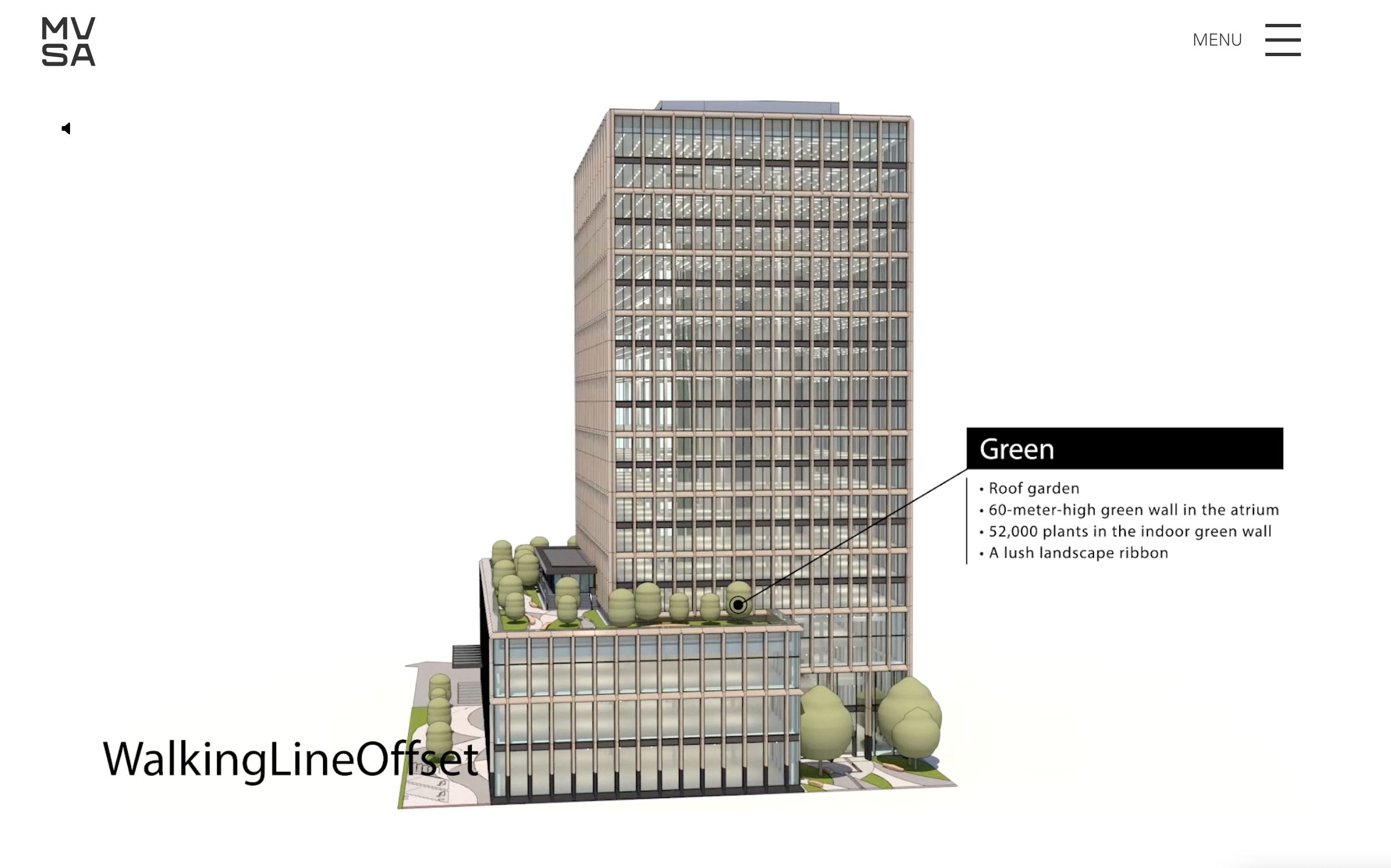
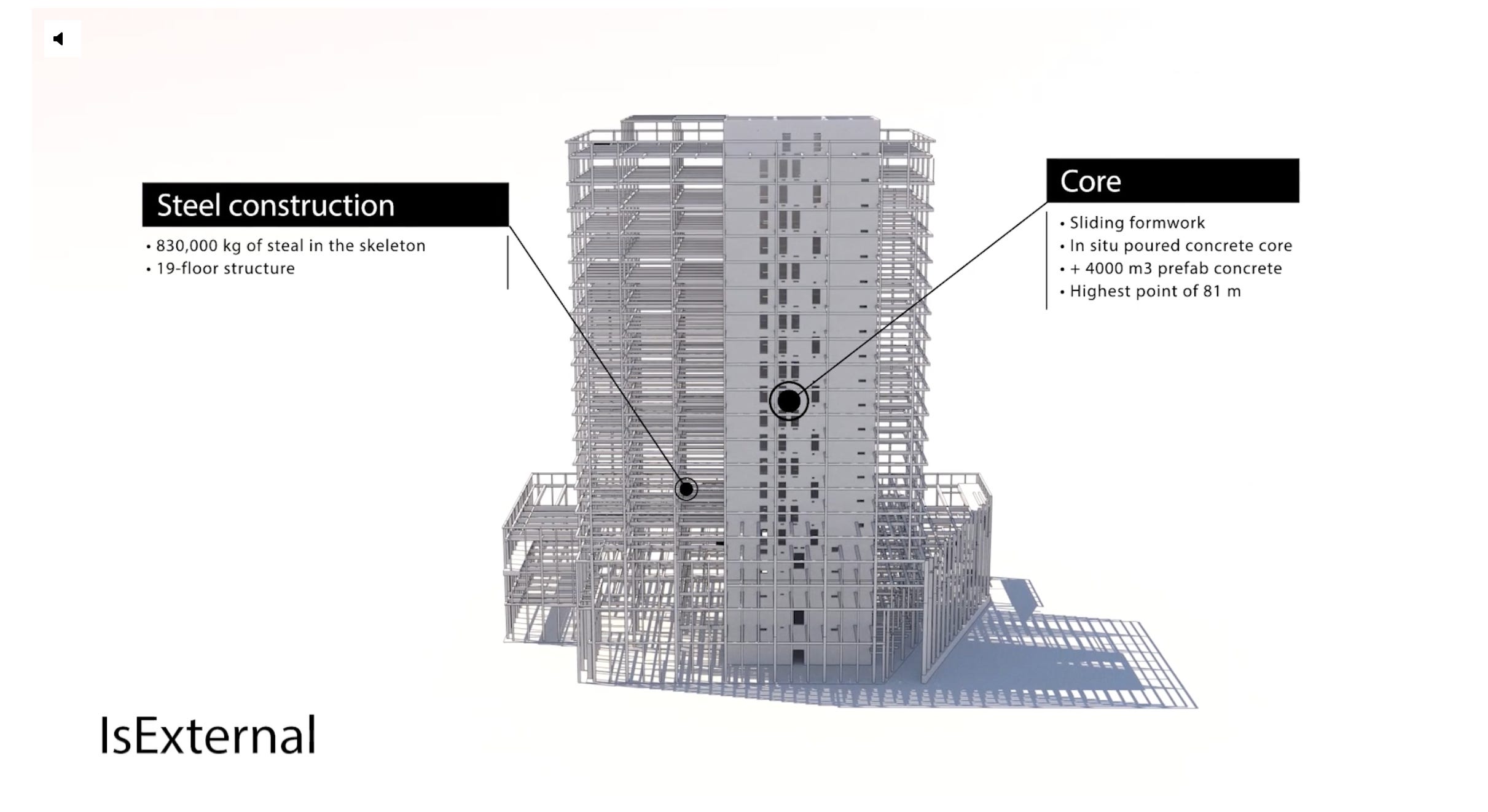
Copyright: MVSA Architects, https://mvsa-architects.com/en/projects/european-medicines-agency-ema/
This comparion is difficult to ignore: In architecture, compressed timelines do not permit any deviation from established safety calculations or standards. A building cannot be declared safe based on assurances alone; it must withstand independent scrutiny, documentation review, and verification. The same principle must apply—without exception—to medicinal products approved by the EMA as “safe and effective”. If anything, the threshold for transparency and verification should be higher, not lower, when public health is at stake. The expectation that no shortcuts are taken in ensuring structural integrity is universal and unquestioned. That same expectation—of rigorous, demonstrable, and independently verifiable safety—must equally apply to mRNA authorizations, which need to be assessed by EMA and authorized by the Commission as what they are: as nucleoside-sequence prodrug gene therapeutics with the same harm profile and risks as similar gene therpeutics.
Unsurprisingly Disappointing Meeting
In our assessment, the outcome of the 2 July meeting was deeply disappointing. The EMA had already stated in its letter of 10th June 2026 that it would not discuss the scientific questions raised by GHRA. It limited the meeting to access-to-documents matters and announced that it would be represented only by staff from its Access to Documents, Communications and Legal teams. No representatives of its scientific committees, product leads or the Paul-Ehrlich-Institut were to attend, and the meeting would not be livestreamed.
According to our contemporaneous account of the meeting, EMA representatives maintained that the volume and coordination of requests made under the T4S initiative justified treating them collectively and restricting the normal handling of the individual applications. The practical consequence of this position would be that the more citizens exercise their rights, the less effectively those rights are protected.
This approach by the EMA is deeply troubling and unlawful, and is irreconcilable with both the structure and the purpose of Regulation (EC) No 1049/2001. Article 6(3) permits an institution to consult an applicant informally with a view to finding a fair solution where a request concerns a very large number of documents. It does not state that coordinated or numerous requests extinguish individual procedural rights. Nor does it remove the obligation to issue reasoned decisions, consider partial access, permit confirmatory applications and preserve access to judicial review. Articles 7 and 8 generally require a response within 15 working days and permit one further extension of 15 working days in exceptional cases, provided detailed reasons are given.
As of publication, the EMA has not provided us with an agreed transcript or complete record of the 2 July meeting. In our assessment, the meeting nevertheless confirmed a continuing preference for the protection of claimed commercially confidential information over meaningful examination of the overriding public interest in disclosure. The participants did not receive a substantive explanation whether the overriding public interest exception had been assessed to the published and heavily redacted re-releases at the Comirnay and Spikevax product website under the alleged label of “exceptional transparency measures”. The documentation of Comirnaty and Spikevax as well as other releases are made available at the related Substack Official Releases from the EMA, because EMA refuses to grant the public an access to all releases under Reg 1049/01. This issue constitutes another dispute between the EMA and the GHRA.
Instead of having a substantive discussion and acting lawfully about the documented concerns and evidence submitted to the EMA, the officials claimed that the communication with the GHRA is circular. Again, the purpose of requesting the regulatory dossier is to permit independent examination of the regulatory dossier and the Agency’s safety conclusion. Reasonably, the conclusion itself cannot serve as a sufficient reason for withholding the information required to verify safety.
Please Join the T4S Request for Acess to Documents for the Purpose of a Scientific Re-Assessment
From the perspective of the T4S initiative, the barriers raised by the EMA demonstrate why the initiative is necessary. The lawful way forward is to continue submitting carefully framed access-to-documents applications by concerned EU citizens, supported by overriding public-interest reports by independent experts explaining the relevance of the requested material to public health, regulatory accountability and independent scientific review. he chemistry professors and the Czech and Slovak experts have already submitted their reports, and further reports are currently in the pipeline and will be published in due course.
The EU jurisprudence acknowledges that the treatment of commercially confidential information does not displace the need for a concrete and individual examination of each document in a marketing-authorisation dossier. The Court of Justice’s judgment in PTC Therapeutics v EMA is particularly important. The Court did not recognise a mandatory general presumption that marketing-authorisation documents held by the EMA are confidential. The judgment confirms that access must be assessed under Regulation 1049/2001 and that claims of commercial harm require a sufficiently specific basis, which the EMA never provided.
A large number of requests may create an administrative burden. It does not convert a fundamental right into an administrative favour. The coordinated exercise of a legal right cannot, by itself, justify depriving each applicant of an individual decision and an effective remedy where evidence point to serious harms to health.
Therefore, please join and be part of the T4S story against EMA to request transparency, as outlined in detail here!
Thanks!!!